

 Español
New transitional world order
Written by Pablo González and Pedro Nonay, trying to find what we can do in our adaptation to changes in world order.
Entry 2
New World Order.
Geopolitics: Europe Is the Spoils.
July 17, 2026
In the previous entry, I outlined the reasons why I believe the new world order will be bipolar: a division of power between the U.S. and China, with new rules governing relations between the blocs.
One of the key reasons for reaching this conclusion is AI. Without control over it, no country can aspire to lead a bloc. And today, only the U.S. and China control it (China more than many people realize, as I mention at the end of this entry).
Focusing on the issue of geopolitics, I think it’s important to pay attention to the following points.
But before addressing these issues, I want to offer a disclaimer: Obviously, I do not have access to all the secret documents regarding the geopolitical decisions of the countries involved. Nor do I believe anyone has access to all those documents. That doesn’t prevent us from trying to deduce where their decisions will be focused, since they’re supposed to be made by teams of well-prepared professionals (or so I hope, fingers crossed) with access to the data. And that data pertains to each bloc’s access to the resources necessary for its quasi-autarkic functioning. This includes data on food resources, energy, AI, rare earth elements, demographics, currencies, and more. We’ve examined this data in previous entries, and I believe it is what will guide bloc leaders in their attempts to “target a country.” Therefore, what I present below cannot be a text of academic precision, but it can be a personal deduction based on applying logic to the available data.
Data on Necessary Resources.
In this entry, I summarized what was discussed in previous entries regarding the raw materials needed by the Western bloc, and what that meant in terms of the countries it must pay close attention to in order to keep them within its bloc or to recruit them. To summarize even further, the result is that the West needs to:
- Keep Chile. For lithium. That doesn’t seem difficult.
- To bring Argentina into the bloc. For lithium and agriculture. Before Milei, Argentina was going to join BRICS, but that’s now a thing of the past.
- Keep Australia. For zinc, lithium, and nickel. It doesn’t seem difficult, but the contracts they’ve signed with China will need to be amended accordingly.
- Retain “what remains of Ukraine as an independent country.” For agricultural grains. That doesn’t seem difficult.
- Win over Venezuela. For oil. It seemed difficult, but it’s almost done.
- Avoid relying on cobalt for electric vehicle batteries, or strike a difficult agreement with the Democratic Republic of the Congo.
In addition, there are the issues of the Panama Canal and Greenland. This is about shipping routes and defense matters. And the difficult issue of Taiwan and AI chips, which I’ll discuss below.
Here it’s important to mention a term that Pedro has coined, which best sums up almost everything: GEO-COMMODITY. It’s a very simple and descriptive way to explain the importance of resources in defining blocs of countries.
Meeting between Trump and Xi in China:
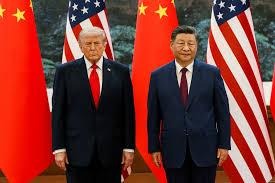
It took place on May 14. According to numerous news reports and analyses, no major historic agreements were signed. However, several relevant messages from both sides were evident.
- The first is that the meeting was staged as a “meeting of equals” and was, moreover, relatively cordial. It was not the prelude to a battle to see which of the two would gain “control of the world,” but rather the start of negotiations over which parts of the world would fall within each bloc and how relations between the blocs could be managed.
- Another message concerned the conflicts in Ukraine and Iran. Trump asked China not to “support Russia and Iran too much.” In response, China made no specific commitments, but it is important to note that it did not mount a strong defense of those two countries either; it even went so far as to say that it did not approve of Iran imposing tolls in the Strait of Hormuz or possessing nuclear weapons. On the other hand, China made it clear that, for them, Taiwan is non-negotiable, and that the U.S. should not assist them when China decides to “take it over.” In response, Trump did not make any major commitments and acknowledged the message.
- It was also clear which issues they know they need to reach some kind of collaborative agreement on. These are energy (both modern and traditional), AI, and rare earth elements. The specific type of agreement desired wasn’t even discussed, but the fact that they addressed these topics—and that so much has been published about them—already lays the groundwork for a future agenda. And the fact that they didn’t discuss other issues makes it clear that they care less about them—or that they do care, but don’t see them as necessary to “reach an agreement with the other side” to carry out the strategy they’ve decided on.
- I also see a significant “non-message.” Perhaps it was discussed, but I haven’t seen anything published where they said anything about Europe. And I don’t believe that neither of them cares about it, nor that they can impose their decision without reaching an agreement. Rather, it seems to me that both have indeed agreed on a course of action in an almost secretive manner, and that there’s no need to discuss it publicly. I’ll address the issue of Europe further below, but I’ll say in advance that I believe their pact is to destabilize the EU and divide it up among themselves.
As we know, they scheduled another meeting for September. We’ll have to keep a very close eye on how things unfold.
Since that meeting, there have been developments in U.S.-China relations regarding AI and rare earth minerals (two of the issues they did discuss). This report from a Chinese media outlet explains China’s complaint about the U.S. blockade on sales to Chinese tech companies, and China’s response in restricting the supply of certain rare earth minerals to American firms. Of course, they explain it in their own way, but it’s clear that each side is defending its interests, “baring its teeth,” and that China isn’t treating this as a major crisis, but rather as a negotiating tactic. Djoomart Otorbaev’s summary of the situation here is also very good.
The wars.
In addition to what was discussed at that meeting, it’s interesting to pay attention to the latest positions of China and the U.S. regarding the wars in Ukraine and Iran. Also, the situation in Taiwan.
Ukraine.
Neither the U.S. nor China is officially involved in that war, but it is evident to any observer that they are assisting (sometimes more, sometimes less) the parties involved.
It is not in China’s interest to let Russia lose the war. That would be a sign of weakness for its bloc. Furthermore, China would lose access to Russian energy (oil and gas). But it is also not in China’s interest for Russia to win the war in a very decisive manner. If that were to happen, Russia would be in a stronger position in its negotiations with China regarding decisions made by that bloc of countries. In other words, it is clear that China wants Russia in its bloc, but it wants Russia to be weakened and grateful, so that it has little to say and sells China cheap energy.
On the other hand, China has no objection to Ukraine remaining in the U.S. bloc (or close to it), and cares little if Ukraine loses territory.
From the U.S. perspective, the U.S. itself has no need for Ukraine’s resources (primarily agricultural grain), but its potential partners (Europe and others) do. In other words, for the U.S., it is a matter of helping its partners and figuring out how to exact a price for that aid—a price it will try to turn into subservience.
Furthermore, the U.S. harbors a significant fear: the possibility that a pact might be reached that is very logical from a geographical standpoint but not so logical from a geopolitical one. This would be the case of a union within the same bloc comprising China, Russia, and Europe (which Genghis Khan attempted in the Middle Ages). Of course, looking at the map, Europe is nothing more than a peninsula of Chi-Russia (or two peninsulas: the Nordic countries and the rest). Such an agreement would represent an unacceptable loss of power and resources for the U.S. To prevent this, part of the U.S. strategy is to undermine trust between Europe and Russia. And it is achieving this through the war in Ukraine. The message is: “If Russia wins, it will come after you next”. In short, for the U.S., Ukraine is a matter of GEOLOCATION: the place where the advance of the other bloc must be stopped.
For that very reason, the U.S. is trying to weaken NATO and is pushing Europe to pay for its own defense costs—or to ask the U.S. for a favor, which it will eventually collect on in some way.
In short, China wants Russia in its bloc—but weakened—and the U.S. has a similar view of Europe, which it also wants to stand against Russia. And the war is fueling both of these situations.
That said, there is a significant risk that is in the interest of neither China nor the U.S., and that is the possibility of an internal revolution in Russia leading to a change in power (or worse, anarchy). If that were to happen, the outcome would be unpredictable, so it stands to reason that they would seek to avoid it. And the way to prevent this is either to force a swift peace—on the assumption that their main objectives have already been met—or to foster a change of government in Russia, but one that is tightly controlled—that is, a change of president without changing the underlying structures—… and for that new president to sign a peace treaty.
Iran.
In the case of the war with Iran, the U.S. does not need the energy resources that pass through the Strait of Hormuz, but China needs them quite a bit. Some U.S. allies need them as well.
The U.S. says its goal is to prevent Iran from having nuclear weapons. It talks a lot about this, but, depending on what suits its interests, it sometimes says the risk is high, and other times that it already has the situation under control. It seems that China agrees that such weapons should not exist there. So there is no conflict between the leaders of the two blocs on this issue.
China’s situation is similar to the one they have on Russia at Ukraine´s war: China wants Iran in its bloc, but somewhat weakened, so it can have cheaper access to energy. And the U.S. is doing China a favor by weakening Iran through the war.
For its part, Iran does want to continue pursuing nuclear weapons. They argue that this is their way of preventing Israel from attacking them. And, for the same reason, Israel wants to prevent Iran from acquiring them, to prevent Iran from attacking it.
Where China and the U.S. agree is that they do not want a shortage of oil to drive up prices to the point of triggering an economic crisis that would severely destabilize their already fragile economies. They will not allow the conflict to drag on indefinitely or to escalate too far.
It is likely that:
a) The U.S. will declare that it has already won the war (without concrete evidence, but to justify its actions);
b) Iran will impose its tolls, which do not matter to the U.S. because it is not a consumer, nor to China, because they will agree that China will not pay them; but they do serve Iran’s purpose of claiming that it has won the war and of generating some revenue to repair the damage; and
c) Israel and Iran will continue their endless conflicts with non-nuclear weapons, which will become complicated again when Iran is once more close to acquiring nuclear weapons. In other words, the problem will be left for the future.
Taiwan.
There is no war there yet, but it is clear that China wants to take it over, though the timing and method have not yet been determined.
It is also clear that, if the U.S. goes to war to prevent this, China will force a large-scale war—perhaps even a nuclear one—because for them, this is a matter of vital importance.
The problem for the U.S. is that Taiwan is home to the chip production the U.S. needs for its AI. As I mentioned in my previous entry, China is finding alternative ways to secure its own chips. Therefore, it’s not far-fetched to think that China might allow Taiwan’s current technology to be transferred to a location in the West, or that it might allow the U.S. to purchase them for as long as it needs to build its new factories—provided the U.S. accepts Taiwan’s annexation by China.
Furthermore, if China does not pose major obstacles to the quasi-annexations the U.S. is carrying out (Venezuela, Panama, Greenland, etc.), there may be a deal that is acceptable to both parties.
Conclusion on wars.
From my point of view, it seems that those wars are almost a matter of consensus between the U.S. and China. They are useful to both in achieving their goal of “dividing up the world.”
They are determining which countries belong to each bloc, seeking to ensure these countries remain subjects of the bloc rather than equals at the bloc’s helm.
And the countries each bloc wants are chosen largely based on the bloc’s specific needs—energy, food, access to chips for AI, and rare earth metals.
Incidentally, regarding energy issues, it would be in the U.S.’s interest for energy to be asymmetrical expensive for China. But today, paradoxically, due to wars and U.S. sanctions, China has asymmetrical cheap energy.
Europe.
I’ve already touched on Europe above, but I think it’s worth dedicating a specific section to it now.
What I said is that it is in the U.S.’s interest for Europe to fear Russia and not even consider joining forces with Russia and China. It is also in the U.S.’s interest for Europe to be weakened, so that it does not demand too much power within the Western bloc, and so that it has to ask for favors (which the U.S. will then cash in on). It is achieving this through the war in Ukraine.
In addition to that, the U.S. has an interest in a divided Europe—that is, in dismantling or weakening the European Union. This is for the same reason regarding power within the bloc. A united Europe could claim a greater share of power than a divided one. An example of this is what happened at the recent NATO summit in Turkey, where the U.S. threatened Spain with special sanctions, but cannot impose them under the treaties without imposing them on all of Europe. Another example is the issue of Greenland: if the U.S. were to actually act to try to take it over, do we really believe that France or Germany would risk their alliances with the U.S. to defend Greenland’s status as a Danish territory?
A divided Europe is also good for China. That will allow it to try to “recruit” some European countries to its bloc (recruiting them all is unfeasible, given the U.S. reaction).
In this regard, one of the most interesting European countries for China would be Spain. This is likely why Spanish left-wing parties are interested in maintaining good relations with China, rather than with the U.S. It seems that history is repeating itself, much like what happened in the 1930s, when Spain came close to falling into the communist orbit.
I’ll repeat here what I already said in this entry:
- On the other hand, it is well known that Spain belongs to Europe (at least for now—though everything could change), and that many people say Europe is the “museum” of the world, with minimal capacity to influence the decision-making of the Western and BRICS+ blocs.
I agree with that, but I usually add—as a joke, though with some truth to it—that Spain will be the “museum bar.” The place for leisure and fun within the museum that is Europe.
I also say that Spain has two other “minor” characteristics to contend with:
- The Strait of Gibraltar. With its ability to influence the extremely important maritime traffic (in the east-west direction). And with its ability to connect the flow of people and goods between Africa and Europe (in the north-south direction).
By the way, it’s imperative to build the bridge, tunnel, or whatever it may be, that has been under study for so long. - And the Spanish language, with its ability to serve as a cultural bridge between Europe and South America.
- The Strait of Gibraltar. With its ability to influence the extremely important maritime traffic (in the east-west direction). And with its ability to connect the flow of people and goods between Africa and Europe (in the north-south direction).
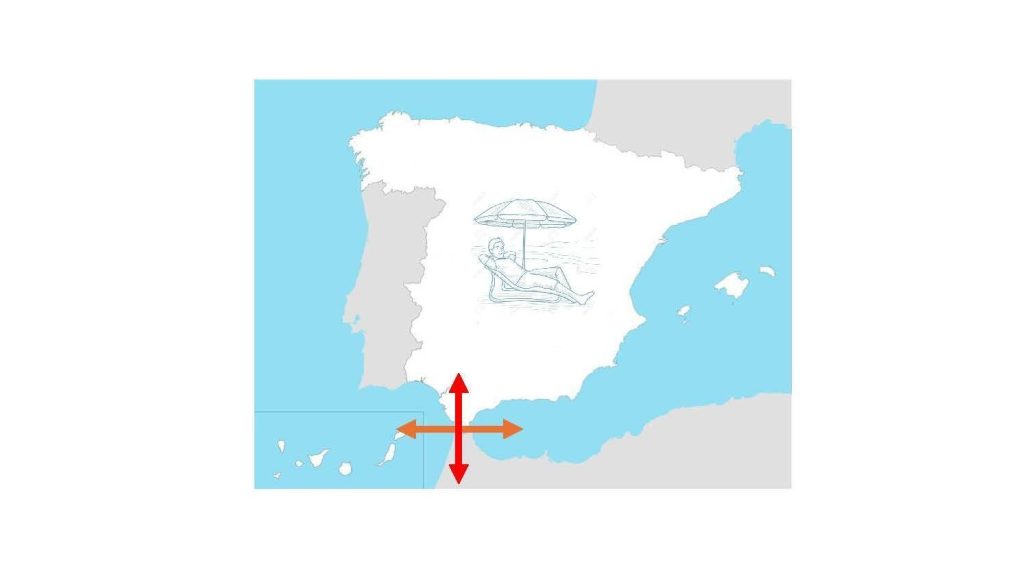
If this were to happen, given the importance of the Strait of Gibraltar for maritime traffic, the U.S. would have to manage its control of the strait from Morocco. And it’s clear that the U.S. has been strengthening its ties with Morocco for some time.
I’ve always thought that, if there were enough wisdom, the best thing Spain could do is hold an auction to see what each bloc offers and decide which one to side with. That’s much better than fomenting internal conflicts.
In short, as I already mentioned in this entry from April 2020, I believe that, given the new geopolitical situation, Europe is going to be the spoils. This very idea is expressed more elegantly in this article, which cites an African proverb stating that when two elephants fight, it is the grass that suffers—and clarifies that Europe is the grass and the elephants are the U.S. and China.
*****
While all of the above is unfolding—and as I already suggested in my previous entry that the new world order will be temporary—China and the U.S. know it’s not worth making major sacrifices, which always come at a high cost. For this reason, I believe that a world war—or a major economic crisis engineered to gain an advantage—will be avoided or postponed.
The saddest part of all this is that they care almost nothing about the deaths caused by wars, nor about the suffering inflicted on many of those who have managed to survive. What matters to them is their share of power.
*****
Before concluding, I want to explain that I have consciously changed the names I use to refer to the blocs of countries. In previous entries, I had been calling them the West and BRICS. Now I say the U.S. and China. The reason is that I used to think the blocs had leaders, but that they were more like a coalition of equals. I believe that is no longer the case, which is why I refer to the blocs by the name of their leading country.
On another note, and related to what I said in my previous entry about AI, I find it significant that Omar Yaghi—the 2025 Nobel Prize winner in Chemistry, a professor at the University of California, and a renowned researcher in the use of AI to develop new materials—has announced that he is moving to work in China. In other words, top scientists are beginning to think there’s a brighter future there than in the West (news article here).
Also on the topic of AI, I find this article very interesting; it essentially argues that China’s strategy for deploying AI is better than America’s and may be more successful in boosting the country’s productivity. The argument centers on the fact that China has decided that AI will be part of the infrastructure funded by the government, making its use virtually free for companies and individuals who use it to improve performance, whereas in the U.S. it is expensive for user companies because they must cover the costs of the owning companies’ debt and profits (although that’s normal, it’s true that it discourages its use).
*****
That’s all for today. I’ll continue in future entris—or so I think.
I’m very grateful to my readers for their attention and for the many ideas you’ve shared with me.
As always, I welcome comments via email: pgr@pablogonzalez.org